
The nickel was one of the most widely used coins in the United States. It moved through daily transactions more often than others, i.e., many nickels from that period survived in large numbers, but commonly in poor condition.
The 1947 issue is a good example. It is a common circulation coin, yet it raises many questions. One of the most frequent concerns is the 1947 nickel no mint mark. Many people believe that the lost mint mark adds value. But is this true?
Read further to check how mint marks from Philadelphia, Denver, and San Francisco affect the 1947 nickel and its value.
The Role of Mint Marks in U.S. Coinage
Mint marks show where a coin was made. They help identify the mint facility responsible for production. In U.S. coinage, mint marks usually appear as small letters.
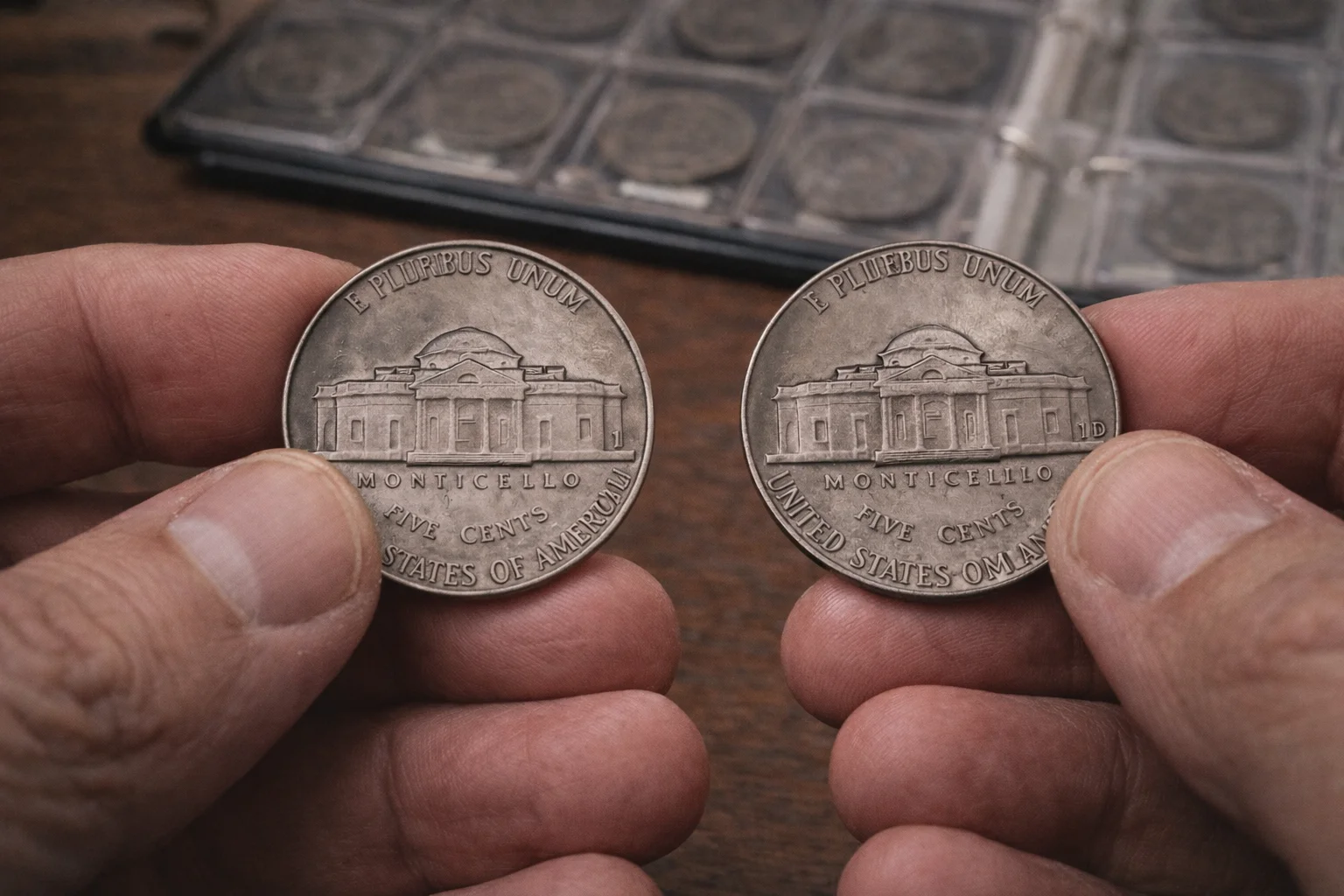
On Jefferson nickels, mint marks are located on the reverse side, near Monticello. The position was the same during this period, which helps identification.
Mint marks serve several purposes:
Tracking production by location
Helping control quality
Supporting record keeping
They were never meant to indicate value. That idea came later, driven by collectors.
Comparing Mint Output: Philadelphia, Denver, San Francisco
Production volume explains how often a coin appears, but it does not define value. For the 1947 nickel, mint output mainly affects availability.
Approximate 1947 Jefferson Nickel Mintages
Mint | Mint mark | Approximate mintage |
Philadelphia | none | ~95 million |
Denver | D | ~37.8 million |
San Francisco | S | ~24.7 million |
Philadelphia issues are the most common. Denver and San Francisco were issued in less numbers comparing with Philadelphia issues, but they are still common and easy to find.
Mint marks can show how many pieces were made, but they rarely affect the coin’s value. Many collectors focus on mint marks and ignore condition, even though condition matters most.
Philadelphia Mint: No Mint Mark
Philadelphia was the primary U.S. mint for many decades. Coins struck there traditionally carried no mint mark. This was standard practice, not an exception.
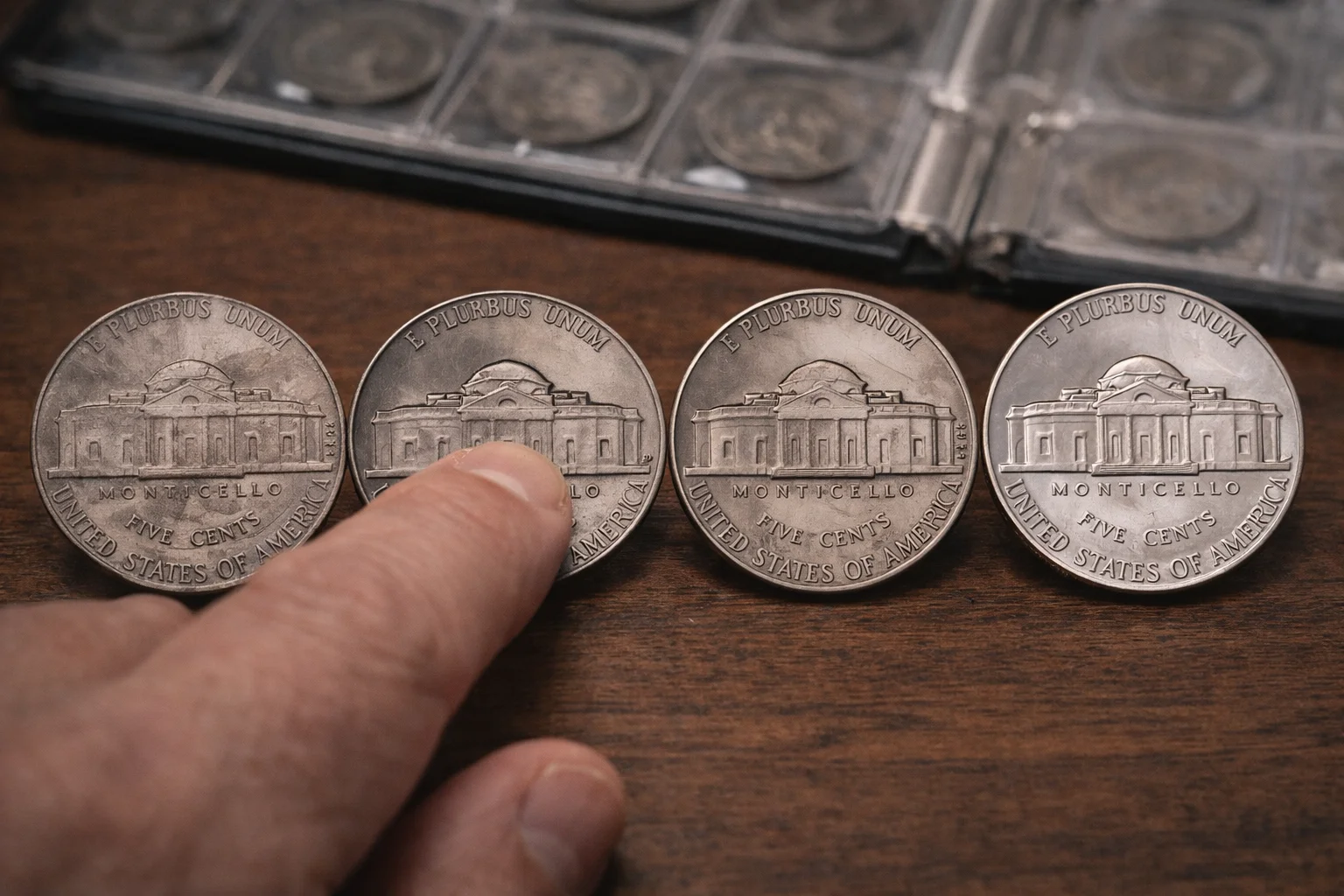
A 1947 nickel from Philadelphia shows no letter near Monticello. This absence is correct. It does not indicate damage, wear, or error.
Main points about Philadelphia issues:
No mint mark by design
Largest production volume
Most commonly found examples.
Because of high issue numbers, Philadelphia nickels appear often in circulation and collections.
Many beginners mistake a worn mint mark for a missing one. But a true Philadelphia coin always has no mark.
Denver Mint: Identifying the “D” Mint Mark
Denver struck a large number of nickels in 1947. These coins carry a small “D” mint mark on the reverse.
On circulated pieces, the “D” can be hard to see. Dirt, oxidation, and wear reduce clarity. Light and angle matter during inspection.
Denver coins are not rare. They appear less often than Philadelphia pieces but remain common.
What to remember about Denver issues:
“D” mint mark near Monticello
Medium production volume
No automatic premium
In higher grades, Denver coins can match or exceed Philadelphia values. The difference comes from preservation, not the letter itself.
San Francisco Mint: The “S” Mint Mark and Its Perception
San Francisco produced the smallest number of nickels in 1947. These coins have an “S” mint mark on the reverse.
Collectors often link San Francisco coins with lower mintages. This often creates higher expectations about value.
Key facts about San Francisco nickels:
Lowest production among the three mints
“S” mint mark on the reverse
Many examples show noticeable wear due to circulation
Lower mintage does not automatically mean higher value. Many San Francisco nickels circulated heavily on the West Coast. As with other 1947 issues, condition remains the main factor.
Do Mint Marks Change the Value of a 1947 Nickel?
Can mint marks make a 1947 nickel more valuable? Are 1947 nickels among coins worth money? The short answer is no (at least not in most cases). For this year, mint marks alone do not place a coin among the valuable ones.
Philadelphia, Denver, and San Francisco nickels from 1947 were all made for mass use. Differences in minting numbers exist, but they do not create the highest prices. All proces comes from conditions, not mintage.
In circulated grades, coins from all three mints trade in similar ranges. Wear, surface marks, and loss of detail reduce value regardless of the letter on the reverse. A worn San Francisco coin does not outperform a clean Philadelphia example.
Mint marks begin to matter only in higher grades. In uncirculated condition, lower population numbers can affect prices. Even then, the difference is moderate and depends on demand at the time of sale.
Typical Market Value by Mint Mark and Grade
Mint | G–VF (circulated) | XF–AU | MS60–MS63 | MS64–MS65 |
Philadelphia (no mark) | Face value – $0.80 | $0.80 – $3 | $3 – $8 | $8 – $25 |
Denver (D) | Face value – $0.90 | $1 – $3.50 | $4 – $9 | $10 – $28 |
San Francisco (S) | Face value – $1 | $1.20 – $4 | $5 – $10 | $12 – $30 |
Disclaimer: Please note that the listed costs may change; always verify before buying or selling.
What This Means for Collectors
Mint marks help identify where a coin was made. They do not define value on their own. For the 1947 nickel, preservation remains the main factor. Clean surfaces and sharp details matter more than the letter near Monticello.
Collectors looking for value should focus on condition first. Mint marks become relevant only after that point.
To quickly confirm year, mint mark position, basic details, and even the market value, try Coin ID Scanner. This best coin value app can assist with:
Identifying mint marks
Confirming standard specifications
Storing collection notes
However, apps cannot judge subtle wear or surface quality. They do not replace grading knowledge. The final value always depends on the condition and market demand. The strongest results come from combining tools with careful observation.
Conclusion
Mint marks tell a story about production, not value. They explain where a coin was made, not how much it is worth.
For the 1947 nickel:
Philadelphia coins lack a mint mark by design
Denver and San Francisco marks are standard identifiers
Condition outweighs mint origin
Understanding this helps collectors avoid common mistakes. It also leads to more accurate expectations.
Finally, the 1947 nickel is a good reference coin. It teaches how circulation, minting, and preservation influence value. That knowledge matters more than the letter near Monticello.